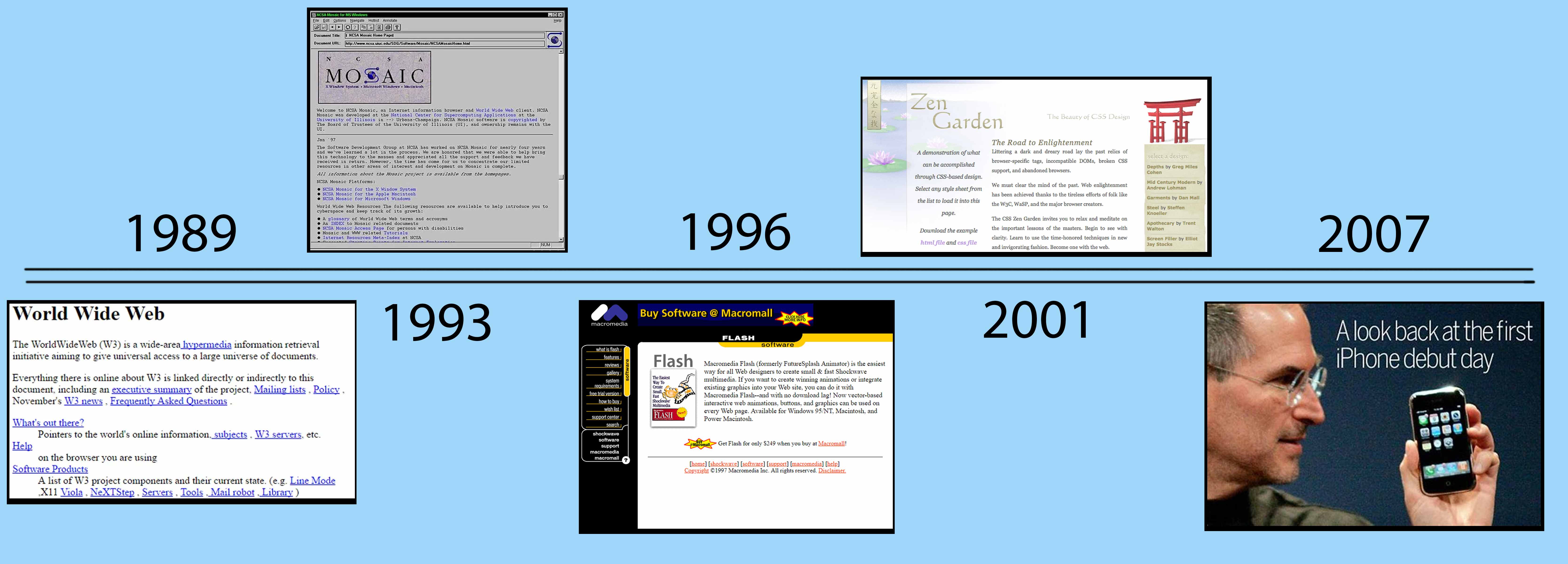
1989: World Wide Web Invented
In March 1989, Tim Berners-Lee, a British computer scientist working at CERN, proposed an information management system. This proposal laid the groundwork for what would become the World Wide Web. His initial vision involved a decentralized system where researchers could easily share information, leading to the development of key technologies like HTML, HTTP, and the first web browser, WorldWideWeb (later renamed Nexus).
Historical Archives
Delve into our historical archives to explore primary source materials from the early days of the web. Discover the original proposal by Tim Berners-Lee, the first drafts of the HTML specification, and early style guides such as Netscape's influential 1994 document, offering a fascinating glimpse into the foundational principles of web design and development.
Explore Archives
1993: Mosaic Browser Released
The release of Mosaic in 1993 marked a pivotal moment in the history of the web. Developed at the National Center for Supercomputing Applications (NCSA), Mosaic was the first widely popular graphical web browser. Its ability to display inline images alongside text, combined with a user-friendly interface, made the internet accessible to a much broader audience and fundamentally changed how web pages were designed and experienced.
1996: Flash 1.0 Introduced
Macromedia's introduction of Flash 1.0 in 1996 brought vector-based animations and interactivity to the web. This technology empowered designers to create dynamic and engaging user experiences beyond static HTML pages. Flash became instrumental in the development of web-based games, interactive applications, and rich multimedia content, significantly influencing the landscape of web design for over a decade.
2001: CSS Zen Garden Launches
CSS Zen Garden, launched in 2001 by Dave Shea, was a groundbreaking project that vividly demonstrated the power and flexibility of Cascading Style Sheets (CSS). By showcasing numerous visually distinct designs applied to the exact same underlying HTML structure, it highlighted the separation of content from presentation and inspired a generation of web designers to embrace CSS for sophisticated and maintainable styling.
2007: iPhone Debuts
The debut of the Apple iPhone in 2007 triggered an explosion in mobile browsing. This shift towards accessing the web on smaller, touch-based devices necessitated a fundamental change in web design principles. Responsive design, which allows websites to adapt seamlessly to different screen sizes and orientations, rose to prominence as designers sought to provide optimal user experiences across a diverse range of devices.