We Can All Help Bumble Bees
Here's How:
Have you ever thought you'd like to tackle a really big problem but just didn't know where to begin? What is so simple about helping bumble bees is that it's not complicated at all. Some of it is just leaving part of your yard or property undisturbed so that bumble bees can find nesting sites and queens can find places to hibenate in during the winter months.
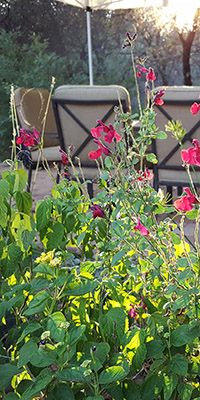
If you really want to roll up your sleeves and actively create a habitat for bumble bees, it isn't difficult. It's best to provide flowering plants that are native to your area, but if you're creating a flower garden and want to attract bumble bees, they have a few favorites. They are most attracted to blue, purple and yellow flowers. I have found that the bumble bees in my local area are really drawn to rosemary in the very early spring, and Spanish lavender and Provence lavender later. What really works for the bumble bees is that these three flowers are at the height of blooming at different times, so there is always food available. That's an important concept in planting for bees. I call it "overlap" blooming. Call it what you'd like: it is a big help to all kinds of pollinators.
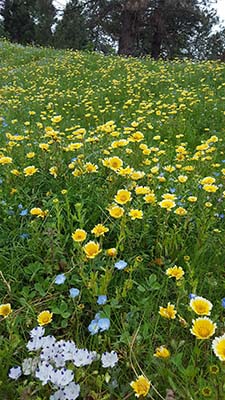
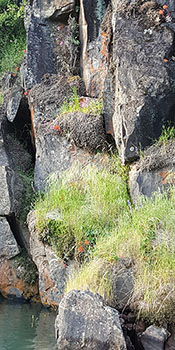
Another way to help bumble bees is to advocate for open, wild spaces like the ones shown in the photographs above. The field of blue and yellow wildflowers is a land trust preserve in my local area, where volunteers have broadcast native wildflower seeds to provide habitat for pollinators. Besides looking amazing in the spring, it's a place that will be preserved for eternity, where people can come to appreciate the magic of nature.
Walking with children in places like these and encouraging them to look for bumble bees among the flowers will help build a new generation of peope who will be interested in preserving these amazing native pollinators. Ask kids to try to identify which species of bumble bees they are finding, and from which plants the bees seem to prefer collecting pollen and nectar.
If you're going to be developing in gardens for bumble bees, you might ask your neighbors to do the same so that the bumble bee habitat is expanded as far as possible. And if your neighbors are using pesticides, share information with them about the dire effect these chemicals are having on pollinator populations in many areas of the world, including in our own backyards. It is often average people who use pesticides the most dangerously because of a lack of awareness about what are considered "safe levels"; therefore ordinary people often use far too much.
Like fishing? Every spring, dozens and dozens of bumble bees fly into my swimming pool and can't get out of the water. One year, I happened to be standing next to the pool when a huge queen dive-bombed straight into the pool directly in front of me. If I hadn't pulled her out, that would have been the end of her colony before it even had a chance to start. Bumble bees (and honeybees too) will survive if you give them a hand and just fish them out of the water. Place them on a dry flower in a sunny area so they can sip some nectar and get their energy back, but first you'll see them energetically cleaning the water off their bodies, trying to dry off and warm up. It's actually pretty interesting to watch them, and with any luck and a little sunshine, they'll usually fly off within a few minutes. I keep a slotted spoon attached to a bamboo pole next to the pool so I can reach them if they are struggling near the middle of the pool. If I had to guess, I'd say I've saved about 300 bumble bees from drowning in the past few years, including at least two queens.
These are just a few simple ways you can make a difference for bumble bees and give them a chance to thrive. Welcome them to your yard and garden. Left undisturbed, they are highly unlikely to sting people. Bumble bees are amazing creatures that are very important to a healthy ecosystem. So even though these days all the buzz is about the plight of honeybees, don't forget that our native BUMBLE bees matter, too.