There are various geological and hydrological factors that have contributed to the creation of the Sierran coniferous forests. The California Sierra Nevada is comprised of a western facing slope that runs somewhat parallel to the NorthEast Pacific Ocean. The Sierra Nevada’s rise gradually, at only about 2% slope, until finally reaching peaks of 10,000 to 14,000 feet above sea level. With Mount Whitney being the tallest at 14,496 feet above sea level.
This gradual increase coupled with the water bearing winds from the North East Pacific Ocean have created a beautiful and varied landscape that gradually transforms through the elevations. The Sierra Nevada mountain range’s size, orientation and gradual slope effect the quantity of water distributed to each elevation. Creating different habitat and landscapes throughout the region with more rainfall occurring at higher elevations.
Another important factor in the creation of the Sierra Nevada is erosion. A large part of this process started a long time ago, an estimated 11,700-2,600,000 years ago with the movement of the glaciers. As the ice melted these giant icebergs scraped away soil, sediment and rocks as they made there way down the mountains.
These giant icebergs left behind peaks of exposed bedrock with only patches of soil. This along with the constant forces of wind, rain and sun have created a variety of soil conditions and depths which has helped to establish the varied forest environments of the California Sierra.
Evolutionary adaptations
Physical, biological and anthropogenic factors have shaped the evolutionary adaptations of living organisms in the Different areas of the Sierra Nevada. I believe the most substantial physical factors affecting the various forests is the climate such as temperature and rainfall. For example the warmer, dryer areas of the Sierra Foothills have adapted with plants and trees that can withstand the drought and high heat of the summer months.
Therefore the foothills contain a larger variety of Oaks along with the Foothill pine, Chaparrel and meadows. These lower elevation forests have evolved for plants and animals that can withstand higher heat and less water but during the winter months they are not exposed to the extreme colds of the higher elevations. This milder winter may be one factor as to why the foothill area is the most biologically diverse.
As you move up the western slope of the Sierra Nevada the climate gets colder and wetter and you began to see one species swapped for another or disappear from the landscape altogether. At the top of the mountain the effects of erosion, cold winters and harsh winds can be seen in the growth of the mountains vegatation.
I believe one important biological factor for the evolutionary adaptation of organisms in the different parts of the forest is the diversity of life and symbiotic relationships found in the soil. The type and depth of soil will allow for certain plants or trees to grow. This vegetation will attract certain insects and animals. These die and feed the smaller organisms and decomposers such as a variety of fungi like mushrooms and mychorrizae and lots of different bacteria. These tiny organisms can help break down matter much quicker providing a steady stream of soluble nutrients to the plants and the cycle starts again.
The more diverse and varied the plants and organisms the richer the nutrients in the soil becomes which in turn attracts a wider range of organisms each feeding on the other in one way or another. These biological factors starting first with plants and trees can help to change the soil content attracting and allowing different organisms to survive in different environments. A lot of these symbiotic relationships between plants, animals, fungi and bacteria build slowly over time and are specific to the environmental factors affecting each location.
Some anthropogenic factors that have affected the evolutionary adaptation of the Sierran coniferous Forests are the human activities that negatively affect these symbiotic relationships between plants and mychorrizae. Mychorrizae is a fungus that surrounds or grows into the roots of plants and trees. They form an extensive network in the soil helping to deliver more nutrients, water and storage to the plant by increasing the plants surface absorption area and releasing enzymes that break down larger nutrients that are normally unavailable to the plant and turning them into a soluble form the plants can use.
This is not just a one sided exchange, mychorrizae don’t have the equipment necessary for photosynthesis so in return for these services the plants provide the sugar needed for the mychorrizae to survive. When the plant dies so does the mychorrizae. Mychorrizae are normally found in undisturbed soil ecosystems. But their numbers are very low to non-existent in soil that has been treated with fungicides, pesticides, chemical fertilizers, tilled, compacted or left fallow and studies show that populations can be slow to recolonize. There are lots of different mychorrizae and each can have a certain specialty such as helping a plant to be more drought tolerant and some can even be plant specific.
There is so much about these tiny organisms that we don’t yet know. Our history of clear cutting and the use of chemicals might be having a bigger impact then the obvious damage we see above ground. It seems to me it would be hard to replicate the relationship between a 500 year old tree and its own specific set of mychorrizae that it had developed throughout the years. Would a ponderosa pine in the foothills have the same mychorrizae or ratio of mychorrizae types as a ponderosa pine trying to survive in the upper yellow pine belt? It is hard to understand the scope of damage since most plants can still survive without mychorrizae but current studies suggest their ability to thrive and range of tolerance is negatively affected. Human forest management and the use of chemicals have in some areas broken the symbiotic relationship that took years of evolutionary adaptation to build between specific plants and the living organisms found in their soil.
Humans impact on the Sierran Coniferous Forest
The historical harvesting and clear cutting of trees in the Sierra Nevada Forests following the years of the Gold Rush have had a tremendous impact on their normal ecological function. The forests from before were more varied not only in species but also in age. The consequent replanting concentrated on trees more valuable as human resources such as the sugar pine and incense cedar. It also left us with a forest of trees that are all relatively the same age.
The use of dams to control water flow and create electricity is an ongoing concern for their effects on the normal ecology of the Forest. By maintaining river water levels to supply the lower towns and agriculture we are displacing and endangering species that have evolved to live in that terrain where the rivers beds would normally dry out.
A good impact humans have had on the Sierra Nevada forest is from our ability to see and understand the damage we have caused and the need for change. During the turn of the 19th century, state and national parks were created to help preserve what natural forests were left and we are trying to balance between the needs of humans and the preservation of the forests. Two concerns we face are the forests natural need of wildfires and the regulation and use of water.
Field Journal: Sierra Discovery Trail
The Sierra discovery trail is located at the head of Bear Valley along the Bear river and is approximately 4,300 feet in elevation. This elevation would be considered mid-mountain forest in the beginning of the Upper Yellow pine belt. My overall impression was a forest of tall trees and some brush. The overhead canopy blocked most sunlight leaving only scattered patches that reached the forest floor.
Species Identified
Field Notes
Incense Cedar
Dense, bright green foliage made of jointed scales. Shaggy bark and highly aromatic leaves and cones. Not a true cedar but is actually part of the cypress family.
Ponderosa Pine
Long three needle bundles that resemble a bottle brush. Cone with prickly points outward.
White Fir
Dark green foliage made of central stalk with short needles protruding on each side so as to create a “flat surface”, Barrel shape cone.
Douglas Fir
not a true “Fir”. Foliage is a central stalk, like the the White fir, but short needles protrude in every direction.
Big Leaf Maple
Doesn’t grow well in wet soil.
White Alder
Large tree with Broadleaves, loves water. Used by the Sap-sucker woodpecker.
Royal Willow
Small to medium size bush with airy leaves and branches. Leaves are long, narrow and pointed. Natives chewed on the leaves and bark, Salicylic acid found in willows is used in making aspirin.
California Buckthorn
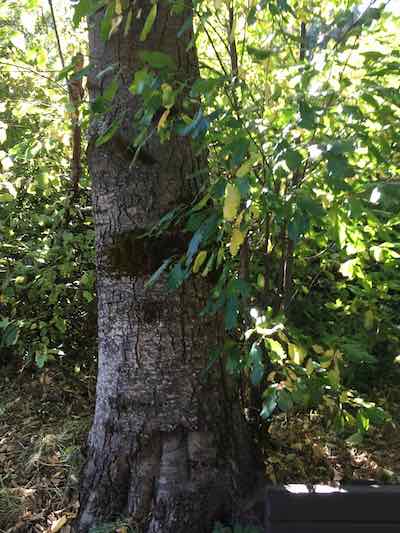
Also known as Sacred Bark or Cascara sagrada, see picture 1
Riparian Habitat
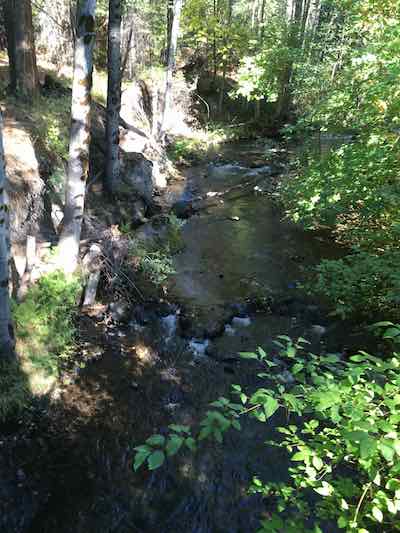
zone surrounding water and can be found at any elevation. See picture 2
Sierra Chain Fern
Largest Fern
Black oaks
Acorns were highly prized and traded for obsidian
Pacific Dogwood
Also known as “bunch berry”. See picture 3
Habitat of the “American Dipper Songbird”
A nice size creek, surrounded by foliage and shaded by the canopy above. The songbird is known to live under the 4 foot waterfall where it can easily dive into the water, its special flaps and membranes over the eyes allow it to hunt underwater for invertebrate sounds of a Mountain Chickadee
Field Notes: Donner Trail
About 7,200 feet elevation. Glaciated area where a lot of the soils have been scraped off. The forest is less dense with some trees displaying stunted growth due to thin soil depth.
Species Identified
Field Notes
Lodgepole Pine
Two needles, Grey bark. Cones open with fire
Red Fir
Replaced Sugar Pine from lower elevations. Five long needles per cluster and long cones.
Mountain Hemlock
Very short needles
Pinemat manzanita
short low growing bush
Huckleberry Oak
usually found in 10,000-11,000 ft elevations
Quaking Aspen
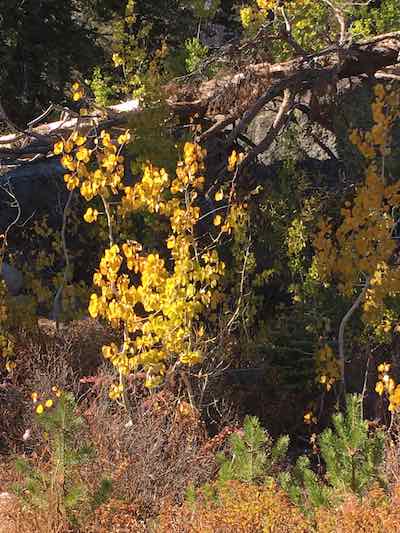
leaves that flutter in the wind. See picture 4
Merganser ducks
diving for fish at Azalea lake which is 15-20 feet deep which allows for fish to hide at the bottom and survive the winter months when the top of the lake freezes.
Erratics
A displaced rock moved possibly many miles by glaciers. See picture 5
Western Juniper
Each tree seemed to be shaped and molded by its individual location. A work of art painted by the forces of wind and snow.