
Skin Types
Information about the four Skin Types below!
Oily
Skin
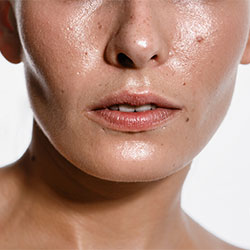
- The feel: thick, firm, and uneven due to congestion in the pores.
- The appearance: shiny with blemishes and comedones visible.
- Follicle size: moderate to large
- Oil level: moderate to high
- Hydration level: good to dehydrated
- Recommended treatment: focus on treatments that balance oil production. Use water-based and noncomedogenic products. Over exfoliation can create oilier skin as sebaceous glands work to increase surface dryness.
- Your routine: double cleanse, exfoliation 3-5x a week, water-based moisturizer, and SPF.
Dry
Skin
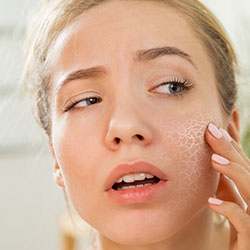
- The feel: rough, flaky, thin, tight.
- The appearance: dull, possibly red, dehydrated
- Follicle size: difficult to see pores, very fine.
- Oil level: minimal production
- Hydration level: minimal production
- Recommended treatment: focus on nourishment and protection treatments. Dry skin often has TEWL (transepidermal water loss). Oil-based products will help TEWL by providing protection for the acid mantle and increasing barrier function.
- Your routine: double cleanse (one of them should be an oil cleanse), very light exfoliation, oil-based moisturizer, and SPF.
Normal
Skin

- The feel: soft and smooth with good elasticity
- The appearance: clear with little to no blemishes
- Follicle size: very small
- Oil level: balanced
- Hydration level: balanced
- Recommended treatment: focus on maintenance and prevention treatments.
- Your routine: double cleanse, exfoliate 1-2x a week, moisturize, and SPF.
Combination
Skin

- The feel: oilier in the center T-zone area and drier on the sides of the face.
- The appearance: can have buildup of dead skin and oil in pores around the nose but have dry or flaky skin outside of the t-zone. Some blemishes and comedones will be present.
- Follicle size: larger in the t-zone, smaller on the sides of the face.
- Oil level: moderate to high
- Hydration level: good to dehydrated
- Recommended treatment: Avoid harsh products and rough exfoliation. Use water-based products to avoid excess oil buildup
- Your routine: double cleanse, exfoliate 3-5x a week, water-based moisturizer, and SPF.
Skin Conditions
Information about some common skin conditions
Sensitive Skin
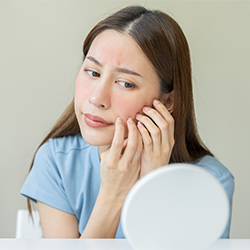
Sensitive Skin will appear red and irritated. It can be caused by many different things like environment, genetics, allergies, and more. It is best to keep track of how your skin reacts to different products or other external factors like laundry detergent. The best treatments for sensitive skin would be focused on bringing inflammation down and soothe your skin.
Hyperpigmentation
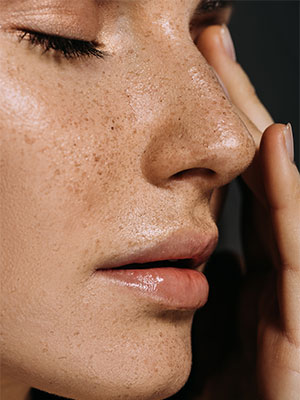
Hyperpigmentation comes in many forms. It is defined by the overproduction of pigment. Sun exposure is the biggest external cause of hyperpigmentation and will make any existing conditions much worse.
Skincare Ingredients
Glycerin
A humectant, which pulls hydration to the skin. A common ingredient in creams, lotions, cleansers, and more.
Squalane
An emollient, it moisturizes and lubricates the skin to soften and smooth the tissue. It is an oil pulled from natural plants to mimic our skin's ability to repair itself. It is also an anti-irritant, which can help soothe sensitive skin.
Azelaic acid
An anti-inflammatory that soothes the skin, reduces pigmentation, and is anti-bacterial
Ceramides
Helps repair barrier function, moisturizes the skin, improves hydration, and softens the skin.