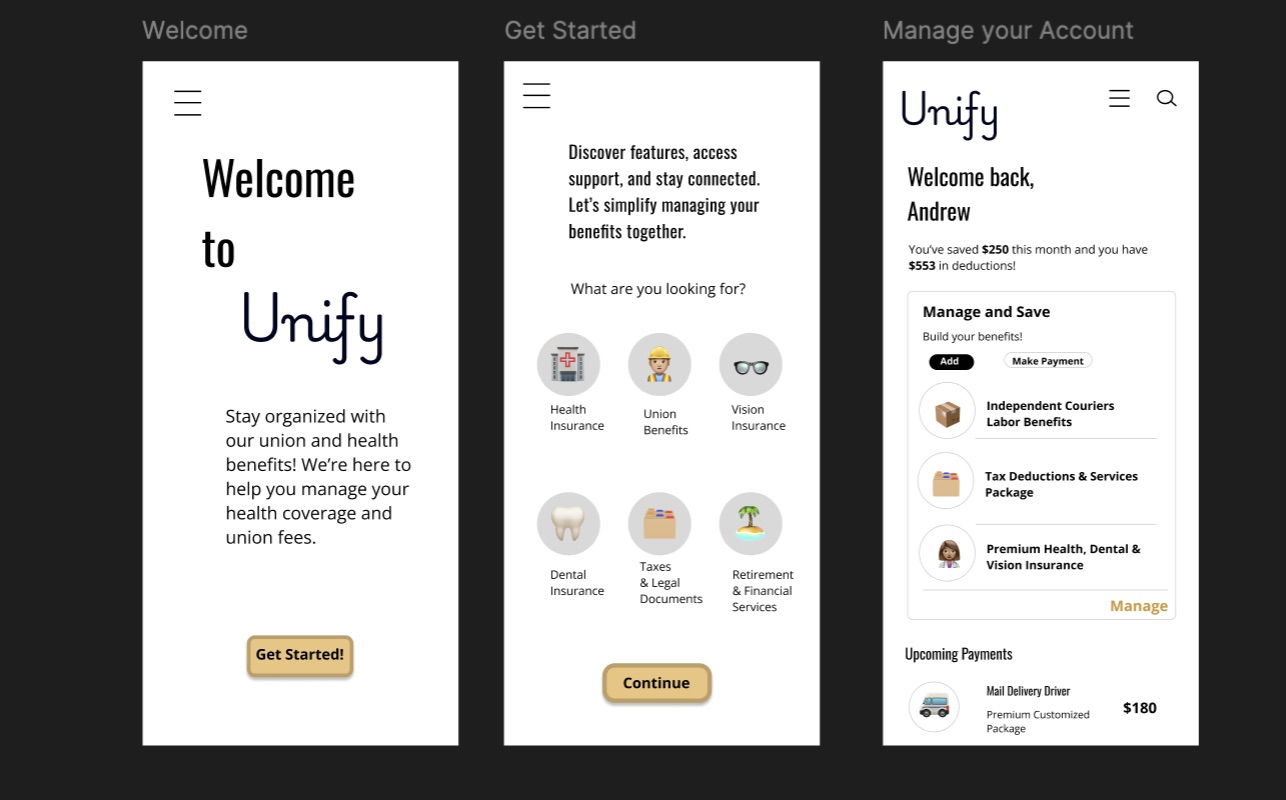
Unify: Independent Union & Benefits for Most Professionals
The economy and job market have faced challenges over the years, impacting millions of hardworking individuals who depend on their jobs to support themselves, provide for their families, and achieve their financial objectives. Unify serves as a trade union and benefits provider, particularly for those lacking access through their employers. In today's world, where entrepreneurship, side hustling, freelancing, and remote work are booming, many individuals and small businesses can gain valuable advantages from this app. Often, employees cannot afford union membership or benefits simply because their jobs don't offer such options at cheaper prices.
Target Audience
Unify aims to serve individuals who can benefit from trade union membership, mainly by providing support and affordable benefits for those whose jobs do not offer such advantages. My target audience includes various groups, depending on the profession, employment status, and economic class. However, to refine my target audience, I will focus on a few key characteristics: individuals who are likely to be professionals and tech-savvy, aged between 18 and 50, with income levels falling within the middle to low-income brackets.
The main goal of Unify is to support underrepresented and marginalized professionals, including minorities, immigrants, and low-income individuals who face systemic challenges and a lack of representation in traditional unions and healthcare access. To ensure the app remains accessible and targeted, Unify focuses on millennials, many entrepreneurs, gig workers, contract workers, and freelancers. These groups often struggle with limited access to benefits and support that come with full-time positions. While a user-friendly app with great UX/UI appeals to everyone, those that truly stand out (like Spotify and Airbnb) tend to cater to these audiences.