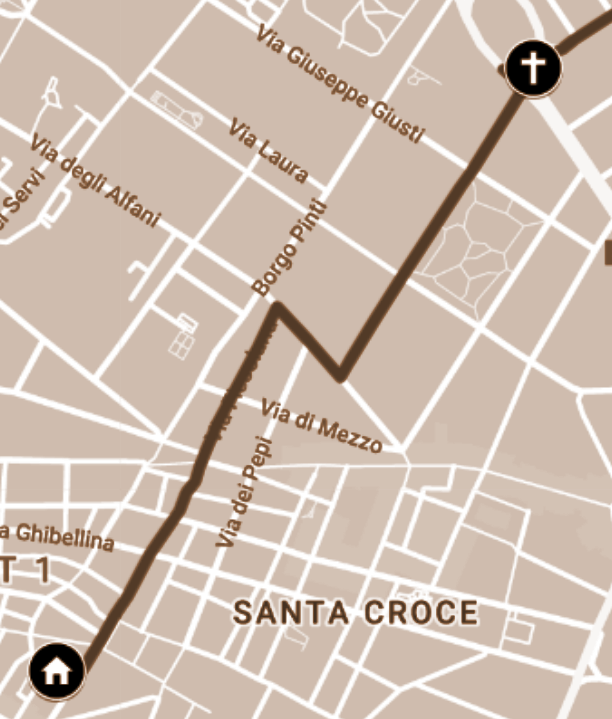
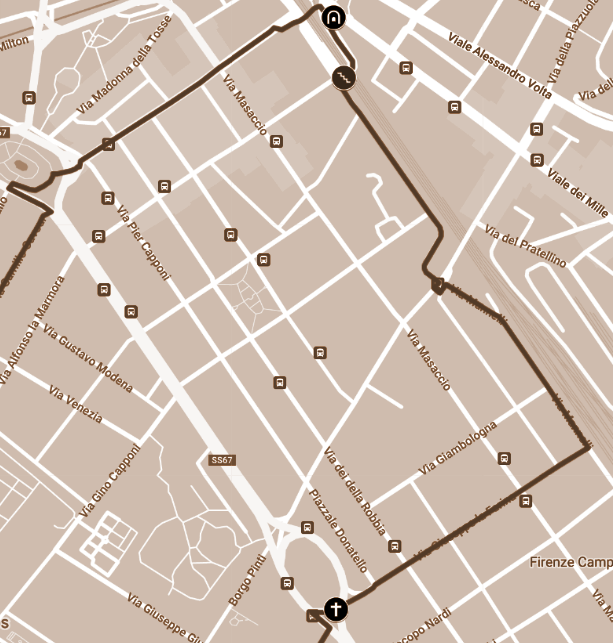
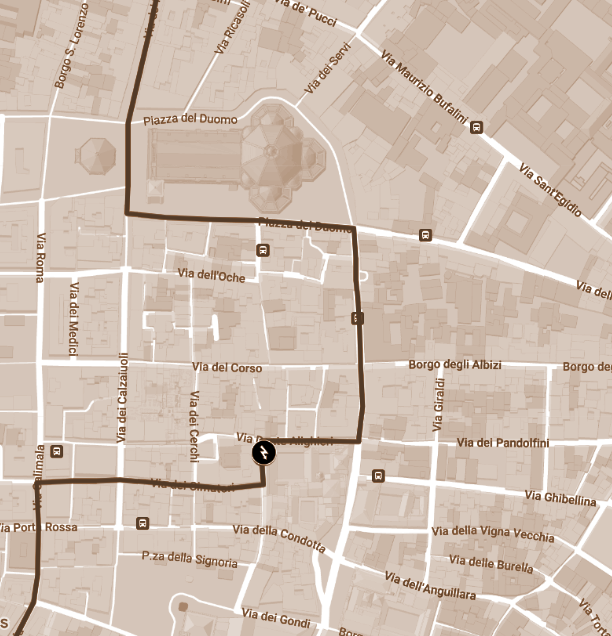
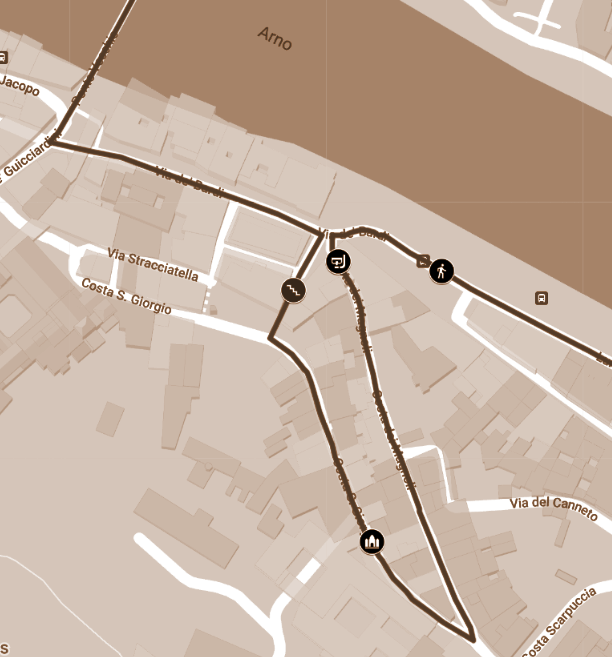
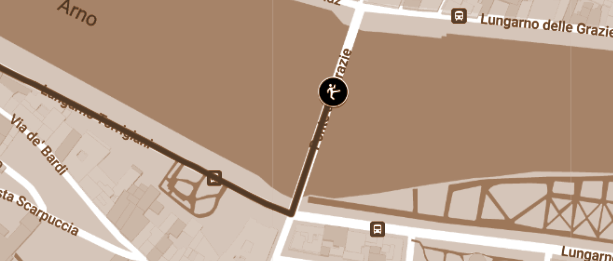
We’ve compiled a list of eight examples of street art in interesting places that you may want to visit during your time in Florence. While walking the map, keep an eye out for other pieces of street we didn’t include, there are many!
1. Shakespeare’s Last Descendents
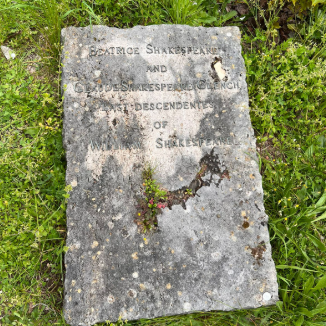
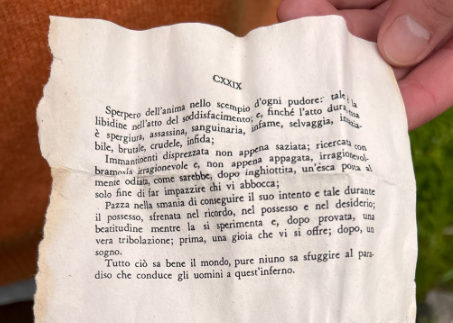
We found a headstone for the last descendants of WIlliam Shakespeare. While looking at the stone we found a piece of paper on it. The paper was a piece of literature in Italian and English which we thought was a very cool find. Even though it is not necessarily street art, we wanted to include it because it still pertains to art in a different form. It was placed there for people to see just like graffiti and it sends a message/is a symbol of who Shakespeare was and how he influenced the world and generations to come.
2. The Throwing Person
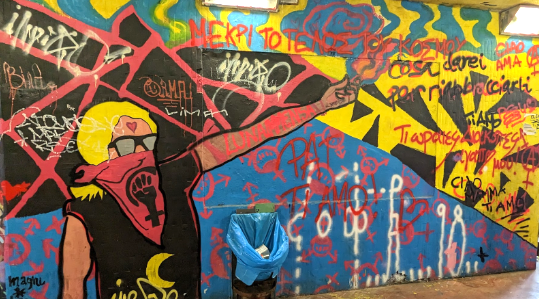
This piece of art is demonstrating women’s rights and equality. It was interesting to find due to the type of community we live in. We included this piece because of the different topics we have covered in class and it seemed very relevant. We also were comparing the similarities between women in the US and women in Italy. The women in Italy hold a higher unemployment rate than anywhere else in Europe and it is primarily because of their time spent working in the household and raising children. This piece is an overarching theme of more solidarity for women and the issues that they face.
3. Don’t Believe the Hype
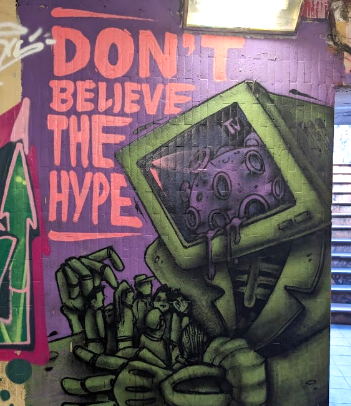
We chose to include this piece because we thought it was a really interesting visual comment on how societies interact with media. In class we have covered topics from social influence through media to fake news, and all have had the same underlying themes; how we navigate a digital world.
4. Smash the Patriarchy

While walking around the city Center, we found a piece of street art that relates to the patriarchy. The piece of art targets the problem with men being in charge/ having more resources in many different facets of society. It brings attention to the problem and the fact that it’s on the street means it reaches a much broader audience. It spreads awareness about the problematic system in society in which men come out on top in many scenarios.
5. Gay Love in the Church
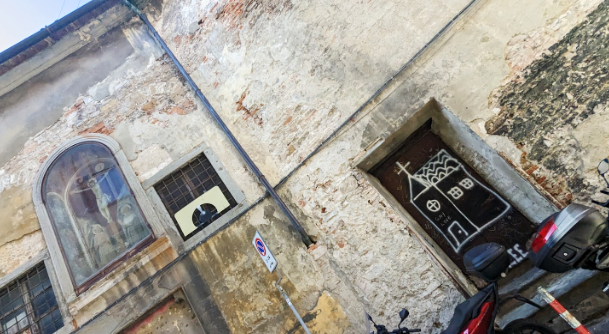
We chose to include this piece despite it being seemingly insignificant because it highlights a huge topic within Christianity. There is a severe issue of homophobia stemming from the church, and this piece is a clear but simple commentary on this. This location has a very interesting juxtaposition of the graffiti art on the wall with a drawing of the church and gay love written inside, and the depiction of Jesus Christ above. Can you find the hidden circular mirror nearby?
6. Mona Lisa Diver
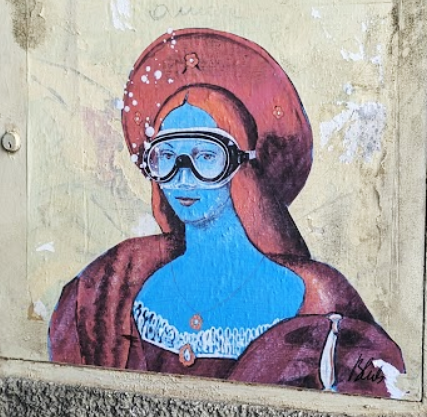
We chose to include this because it is an intersection of high and low culture. The Mona Lisa is an example of high culture because it is one of the most well known pieces of art in the world and it is not accessible to everyone. On the other hand, the graffiti aspect of spray painting the Mona Lisa makes it low culture because graffiti is more accessible and not luxurious. On the other hand, graffiti is often looked down upon in society and is considered to be vandalism, so we chose to include this piece because the artist took something that most of the world believes to be priceless and they put it on a wall in an alley.
7. Saint John the Baptist
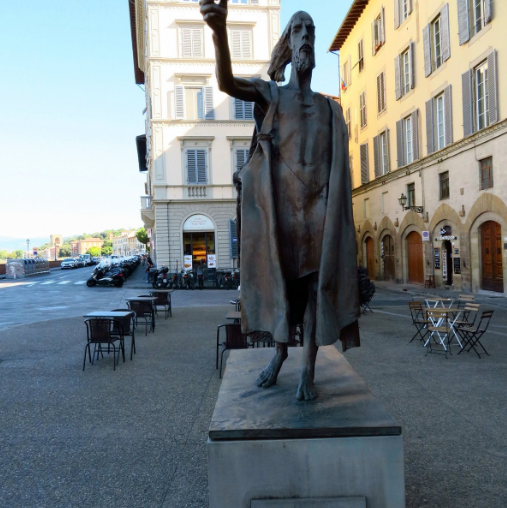
We chose to include San Giovanni Batista into our walking map because the artist, Giuliano Vangi, is a valued artist here in Florence. It highlights how highly art is perceived here. His art is said to unite with the city fabrics and he was the only living sculptor at his time to have his very own museum. We thought this was a very interesting find because we had never seen the sculptor before and upon further research we discovered more facts about Giuliano Vangi.
8. L'Uomo Comune

We chose to include this into our walking map because the artist Clet is a big part of street art in Florence. At first glance someone might interpret this as a depiction of suicide or something of that nature, after all the statue literally is a man walking off of a bridge. That being said, another interpretation could be of feeling confident and courageous when walking into nothingness. Regardless of each individual's point of view, it is clear that the statue holds a lot of importance as a piece of art.